

Obesity at the Source Code: Lilly’s Gene Editing Ambition Could Change Everything
If obesity really is a disease, what happens when the cure isn’t a drug, but a line of code?

We're standing at the precipice of a renaissance in obesity medicine
For most of modern medicine, obesity has been treated like a personal failure.
Too many calories, not enough willpower.
Too much shame, not enough science.
And for a long time, we patients believed it. We were told we did this to ourselves, and we carried that burden. Some of us still do. The failed crash diets, the soul crushing weigh-ins, the silent prayers for supernatural strength that would make this time end differently.
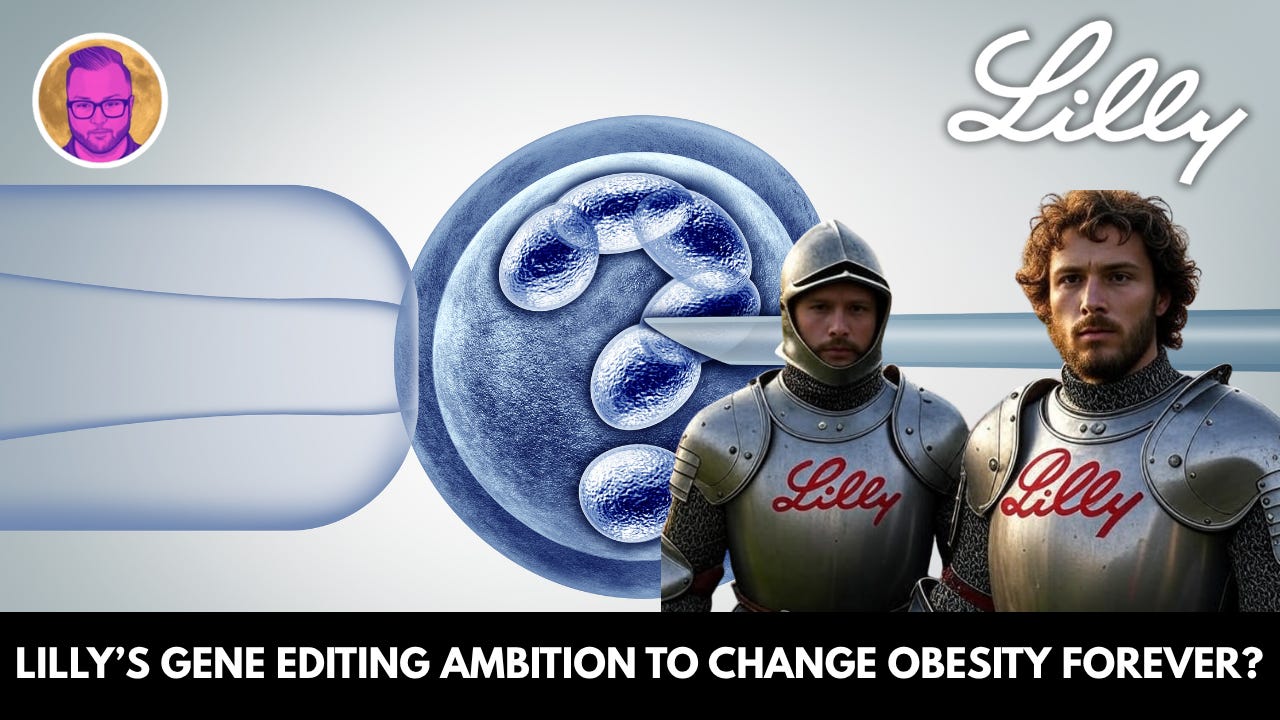
But the real shift, the real Renaissance, began when a handful of researchers and physicians partnered with organizations like The Obesity Society and dared to look deeper.
They were the pioneers who first chose to stop blaming the patients who were giving it their everything, and started asking better questions.
What if this wasn’t about behavior at all?
What if the problem wasn’t rooted first in our choices, but in our biology?
What if obesity wasn’t a symptom of failure, but a disease?
That question cracked the door open. And the flood of answers hasn’t stopped since.
Bariatric surgery and GLP-1 medications were the first breakthrough for many of us. These weren’t just suppressing appetite. They were regulating metabolism, and restoring hormonal balance. These treatments target the real systems driving hunger, insulin resistance, and fat storage.
But Eli Lilly’s next move? It goes further than treatment. It goes to the source.
Keep reading with a 7-day free trial
Subscribe to On The Pen to keep reading this post and get 7 days of free access to the full post archives.